Sauna Heater Sizing Calculator
Estimates heater power (kW) using room volume plus effective-volume adders for glass and other non-insulated thermal mass. Always confirm final selection with your heater manufacturer’s chart.
1) Sauna room dimensions
2) Insulation and build quality
3) Windows and glass
4) Non-insulated surfaces and slab conditions
5) Changing room / heat loss through one wall
6) Wood-fired only (optional)
Heater sizing is part math, part real life
If a sauna heater is too small for the room, it shows up fast. Long heat up times, struggling to hold temperature, and constantly running at peak output. In our experience, undersizing is one of the most common mistakes, especially when a build includes more windows or other details that quietly increase heat loss.
How we think about sizing a heater
Most heaters come with manufacturer sizing guides, and that is where we start. From there, we adjust for the variables that change real world performance. Windows matter. Build details matter. If a room is right on the fence between two heater sizes, we lean bigger because you can always turn a larger heater down, but you cannot push a smaller heater past its peak output.
So why this calculator exists?
The goal of this calculator is not to replace manufacturer charts. It is meant to help you estimate the heater range you should be shopping in, based on the same kinds of variables we look at during design. It also helps explain why two saunas with the same interior square footage can need different heater sizes once you factor in glass, insulation quality, and surfaces that pull heat out of the room.
What the calculator asks and why it matters
Room size and ceiling height
Sauna heater sizing starts with room volume, not just floor size. A taller ceiling increases the total air volume that must be heated.
Insulation and vapor barrier
Insulation quality and a proper vapor barrier help the room hold heat consistently. Weak insulation typically means the heater has to work harder to reach and maintain temperature.
Windows and glass type
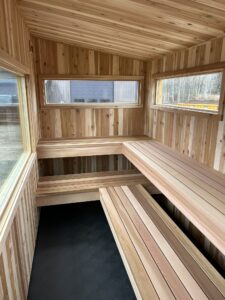
More glass generally means more heat loss compared to an insulated wall. That is why we tend to upsize when a design includes larger windows. This calculator includes a toggle for single pane vs double pane glass because window performance changes depending on the build.
Changing room
An attached changing room changes how heat moves through the structure, depending on whether that adjacent space is heated or not. The calculator treats this as an adjustment factor because it can influence real world performance.
Floor and ceiling conditions
A well insulated floor and ceiling help the sauna hold heat. A slab floor, especially when not insulated, behaves differently than an insulated wood assembly and can affect heat up behavior.

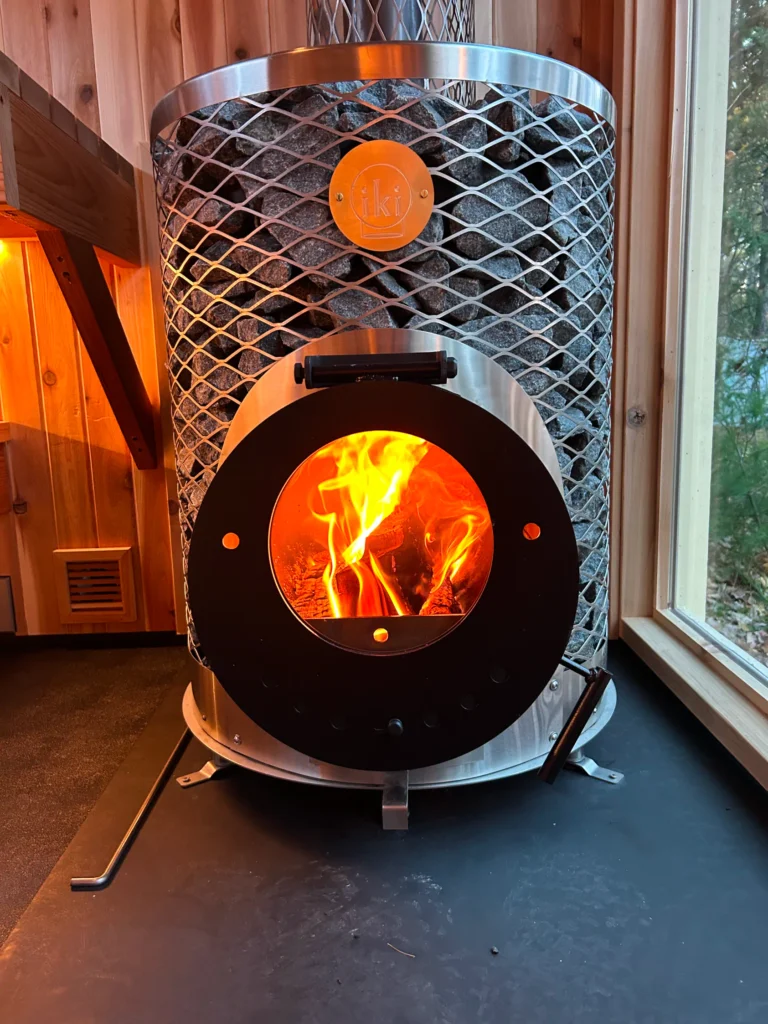
Wood stove note: performance depends on the wood you actually burn.
If you are sizing for a wood stove, wood quality matters. Wet or damp wood can prevent you from getting the fire hot enough, regardless of brand or stove quality. Softwoods like cedar and pine burn faster and dirtier, while hardwoods like oak and maple burn longer. If someone wants the least maintenance and the most consistent performance, clean dry hardwood is the best baseline.
But here’s the thing. In real life, people burn what they have. Scrap lumber, mixed bundles, and imperfect loading of the firebox can reduce practical performance compared to ideal rating conditions. That is another reason we tend to avoid sizing right at the edge.
Common sizing mistakes this is designed to prevent
The biggest one is undersizing the heater for the actual build, especially when adding more windows. Another mistake is choosing smaller stoves with small fireboxes that limit what wood fits, which can turn into a daily inconvenience and can affect how steady your heat is during a session.
Final reality check before you buy
Use the calculator to estimate the correct heater range, then verify the final selection with the manufacturer’s chart, the installation manual, and your specific design constraints. If you are uncertain and you are between two sizes, the safer direction is usually slightly larger, then run it at a lower setting.