South Korea's Sauna Culture: Inside the Jjimjilbang and the 600-Year-Old Kiln Sauna
Korea has been building dedicated sweat structures since the 1400s. The country's modern bathhouse complexes, called jjimjilbangs, grew out of that history and turned communal heat into a national pastime. This is the fifth stop in our global sauna traditions series, and it is one of the most instructive for anyone who takes sauna building seriously.
Korean Sauna Facts
- Oldest record: The hanjeungmak, Korea's traditional kiln sauna, is first documented in the 15th-century Annals of the Joseon Dynasty under King Sejong.
- Original operators: Buddhist monks ran state-supported hanjeungmak clinics to treat the sick, with separate men's and women's facilities built from 1429 onward.
- Construction: Domed kilns of stone and clay, traditionally fired with pine wood and often lined with hwangto (yellow clay), salt, or jade.
- Modern form: The jjimjilbang, a multi-room bathhouse complex that rose to popularity in the 1990s, typically open around the clock.
- Heat range: Themed kiln rooms run from ice rooms up through the bulgama, a high-heat kiln descended directly from the hanjeungmak.
- Structure: Gender-separated bathing floors, shared common floors with heated ondol stone floors, sleeping rooms, and food halls.
A Night in a Jjimjilbang
Picture arriving at 9 p.m. on a Friday in Seoul. You trade your shoes for a locker key at the door. You pay a flat fee, somewhere around the cost of a movie ticket, and receive a cotton T-shirt and shorts. Behind the first set of doors is the mokyoktang, the gender-separated bathing floor. You wash seated at a low shower station, soak through tubs at three or four temperatures, and take a cold plunge.
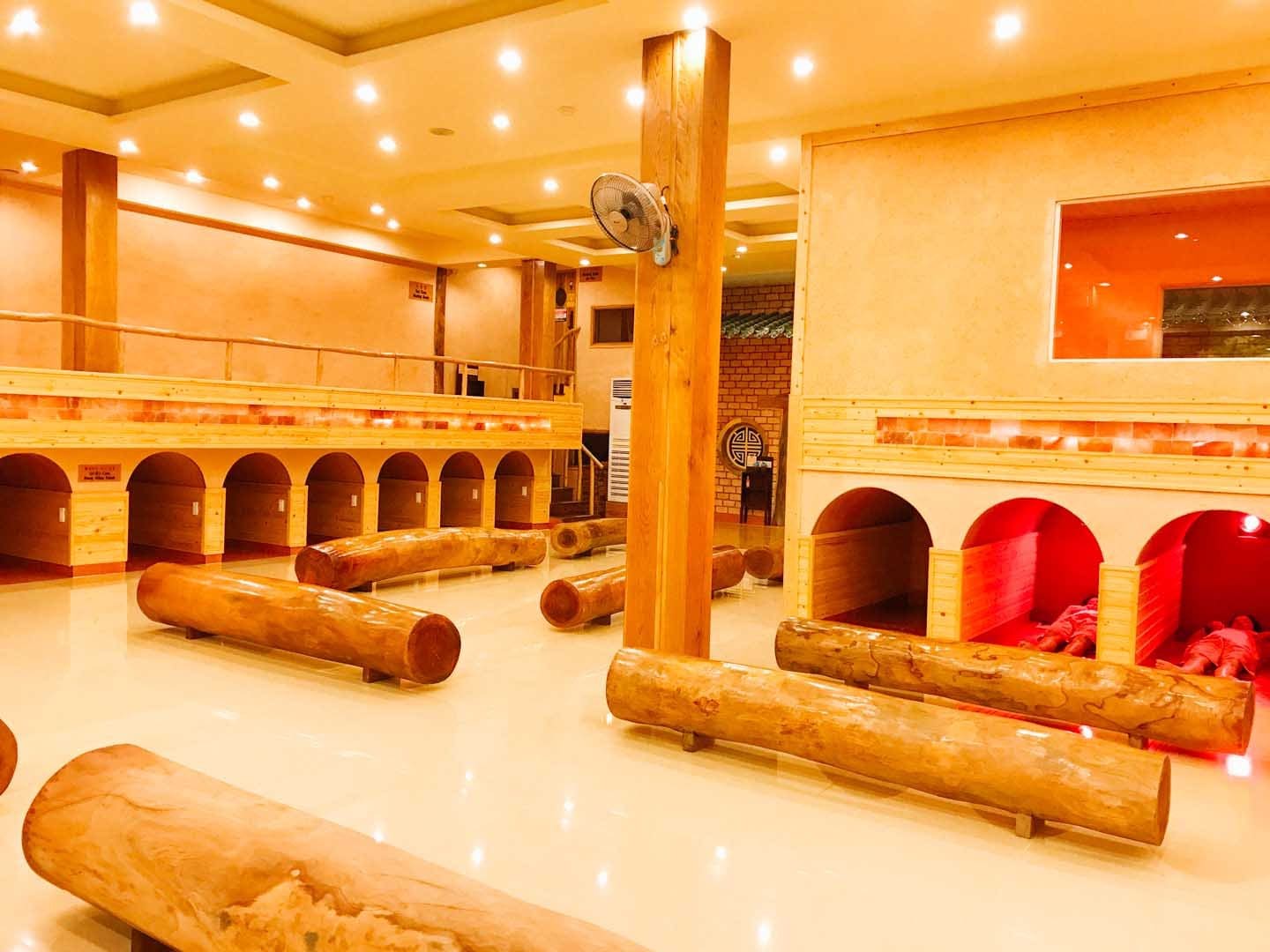
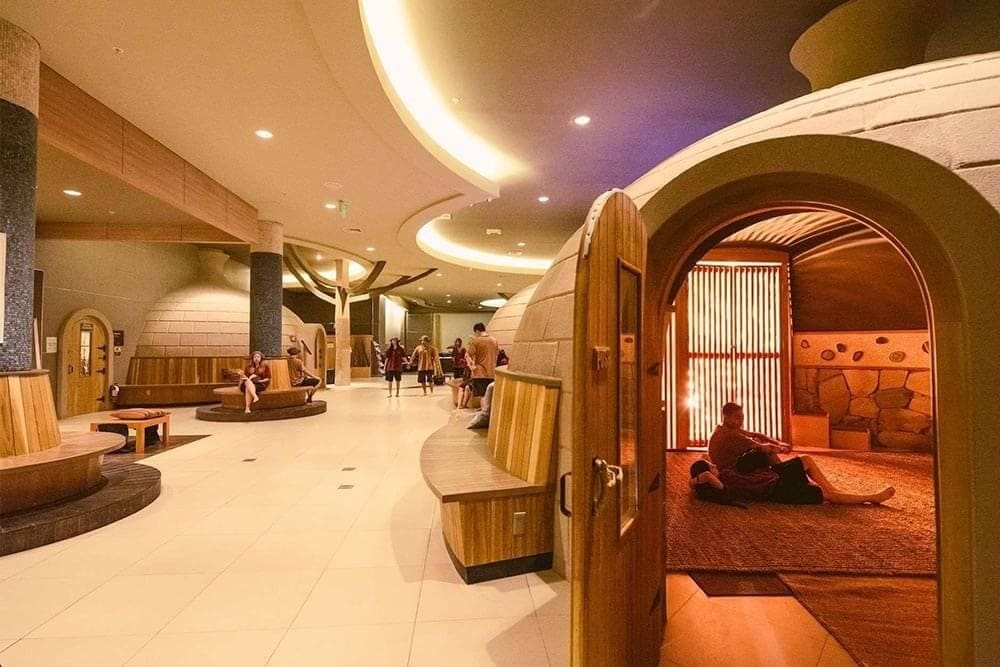
Then you dress in the house uniform and walk into the common floor. This is where Korea separates itself from every other sauna culture on earth. Families sprawl on heated stone floors watching television. Friends share bowls of shaved ice. Office workers who missed the last train sleep in bunk rooms. Around the perimeter sit the kiln rooms: a salt room, a jade room, a charcoal room, an ice room, and somewhere near the back, the bulgama, the hottest chamber in the building.
You can stay all night. Many people do. The jjimjilbang is not a spa appointment. It is closer to a public square with heat.
Where It Started: Monks, Kings, and Stone Kilns
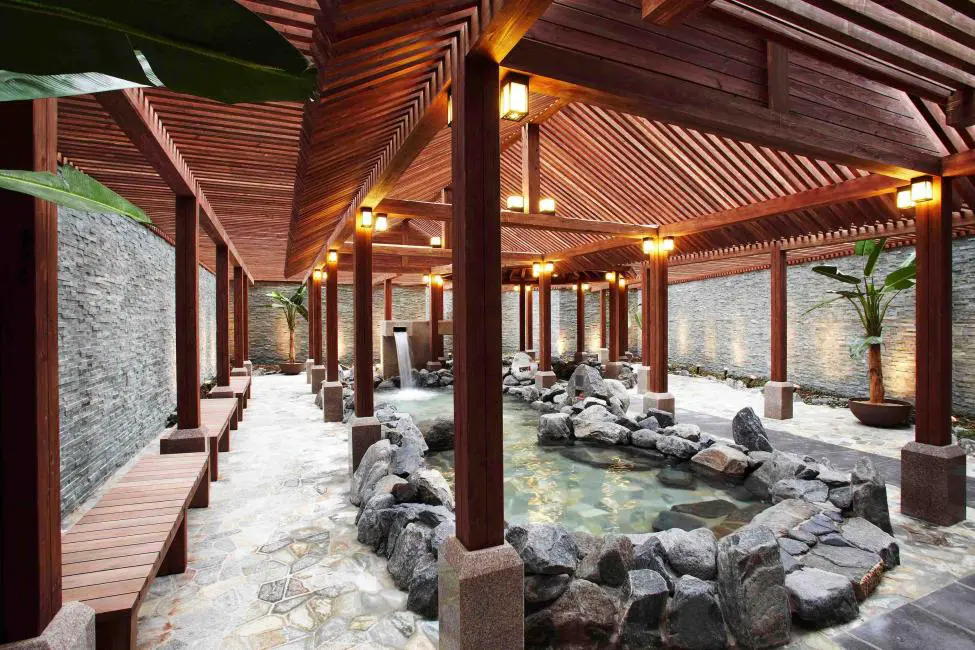
The paper trail on Korean sweat bathing is unusually good. The hanjeungmak, a domed kiln sauna built from stone, appears in the Annals of the Joseon Dynasty in the 15th century under the name hanjeungso, which translates roughly to "sweat-steaming place." The records describe them as medical facilities. King Sejong, the same ruler who commissioned the Korean alphabet, supported them as public health infrastructure.
The operators were Buddhist monks. They ran state-supported hanjeungmak clinics that treated the sick and the poor, and demand ran high enough that separate facilities for men and women were being built by 1429. That is a functioning public sauna system, staffed and funded, six centuries ago.
The construction method has barely changed. A hanjeungmak is a dome of stone and clay. Pine wood burns inside or beneath the chamber until the mass of the structure is saturated with heat. The fire comes out, the people go in. Bathers traditionally wrapped themselves in jute or hemp cloth because the radiant heat off the stone is intense enough to demand it. The bulgama rooms found in modern jjimjilbangs are direct descendants of this kiln, run at the highest temperatures in the building.
This is thermal mass heating, the same principle behind a Finnish smoke sauna or a masonry stove. Heat the structure, not just the air. Anyone who has stood next to a stone-clad wood stove after a three-hour burn knows the quality of that heat. It is even, deep, and it does not flinch when the door opens.
The Materials: Hwangto, Salt, and Jade
Korean builders line their kiln rooms with specific materials, and each carries its own tradition. Hwangto, a yellow ochre clay, is the most common. Salt rooms use blocks or loose crystals of mineral salt. Jade rooms plaster the dome with powdered jade. Charcoal rooms embed hardwood charcoal in the walls.
Strip away the folklore and there is a materials lesson here that any builder should respect: the surface you heat determines the character of the room. Clay, salt, stone, and wood each store and release heat differently, and each smells different at temperature. It is the same reason we are particular about the woods we build with. Knotty cedar, clear cedar, and aspen behave differently on the wall of a hot room, and the choice changes the experience of every session that follows.
From Bathhouse Necessity to National Institution
The neighborhood bathhouse, the mokyoktang, became a fixture of Korean city blocks in the postwar decades, when most urban homes lacked private hot water. Through the 1960s and 1970s, the bathhouse chimney was standard city architecture. People went because they had to.
Then Korean homes got bathrooms, and something interesting happened. Instead of disappearing, the bathhouse scaled up. The jjimjilbang emerged in the 1990s as a larger format that bolted saunas, sleeping floors, restaurants, and entertainment onto the traditional bath. The simple mokyoktang has declined since, with Korea Herald reporting a drop from 8,904 bathhouses nationwide in 2000 to 5,656 in 2025, while the large jjimjilbang format holds its ground as a cultural institution and a draw for foreign visitors.
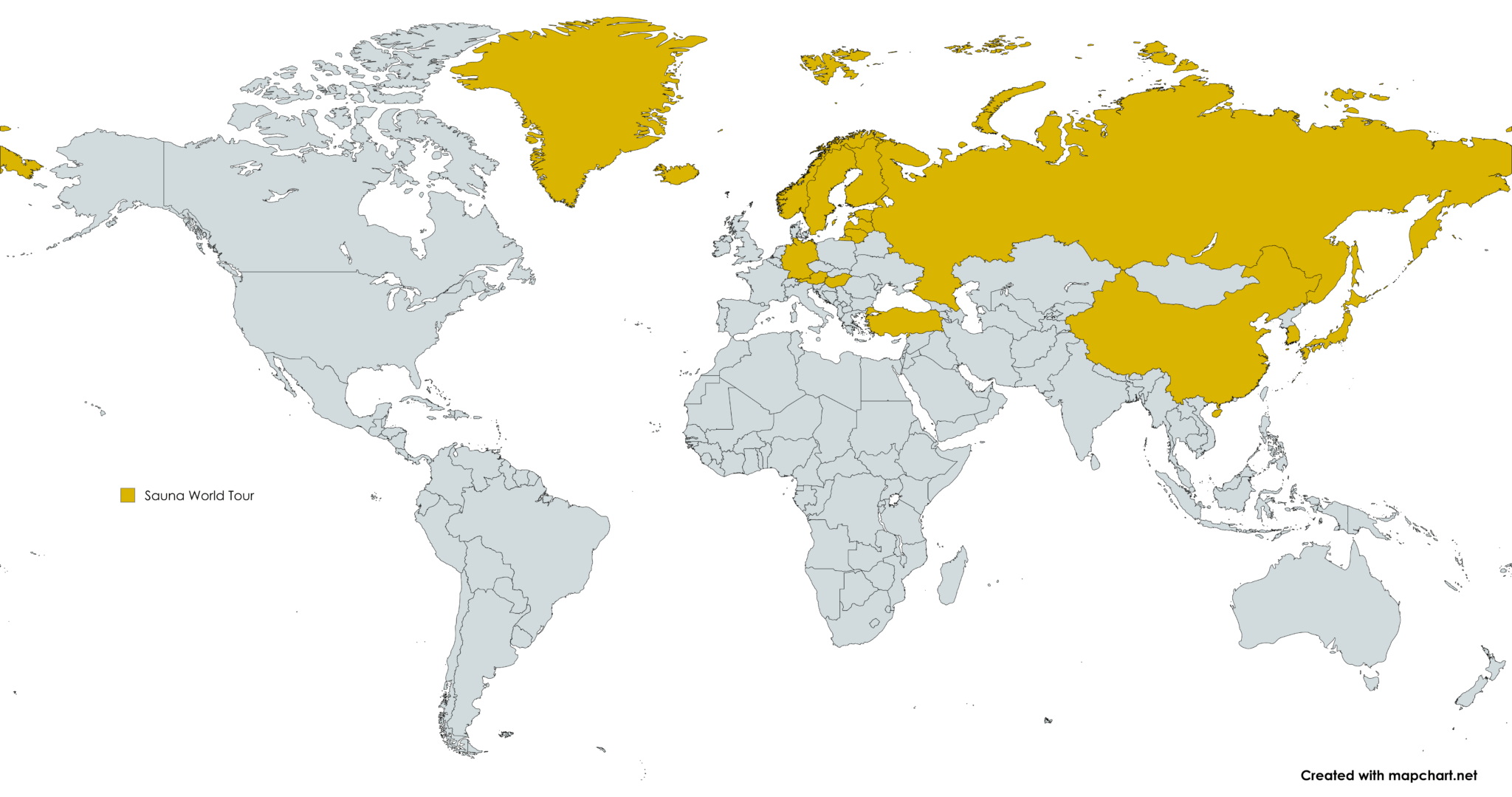
The lesson in that trajectory: when bathing stopped being a necessity, heat remained a destination. People kept showing up for the sauna, the company, and the ritual. That pattern repeats everywhere sweat bathing has deep roots, from Finland to Japan's onsen and sento culture to the banyas we covered in our Russia stop.
What the Research Says About Regular Heat
Korea built saunas as medical infrastructure in the 1400s. Modern cardiology has circled back to the same idea. A long-term study of Finnish men by Laukkanen and colleagues, published in JAMA Internal Medicine in 2015, found that men using a sauna 4 to 7 times per week had a 63% lower risk of sudden cardiac death than once-per-week users. A 2018 systematic review by Hussain and Cohen in Evidence-Based Complementary and Alternative Medicine reviewed the clinical literature on regular dry sauna bathing and found most studies reported beneficial health effects. We keep a full breakdown of the peer-reviewed literature on our sauna health benefits page.
The jjimjilbang habit of alternating hot kilns with cold plunges and rest is, in structure, the same protocol a traditional Finnish sauna session follows. Heat, cool, rest, repeat. We walk through that cycle in our post on how to use a traditional Finnish sauna.
Korean Saunas and Finnish Saunas, Side by Side
Both traditions center on radiant heat in a purpose-built room. The differences come down to heat source and social format.
A Finnish sauna heats rocks on a stove and lets you control humidity by throwing water, a practice called löyly. Session temperatures typically run 170 to 195 degrees Fahrenheit, and the room is small and quiet by design. A hanjeungmak or bulgama heats the entire structure and runs dry. A jjimjilbang surrounds that heat with an entire building of activity, food, and sleep.
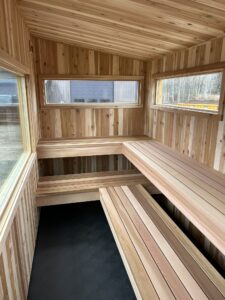
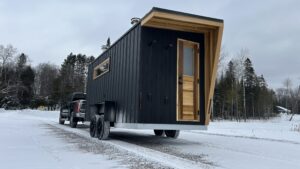
Our builds follow the Finnish line: stove-fired hot rooms with IKI, Kuuma, and Harvia heaters, cedar and aspen interiors, and full control over löyly. But the Korean tradition validates something we tell every client who asks about scale. Heat works as a gathering place. Our Gooseberry 14ft mobile sauna seats 10 to 12 people for exactly that reason, and our commercial sauna builds take the same idea further for resorts, retreats, and operators who want the jjimjilbang effect on American soil.
Korean Sauna Culture, Present Day
Today the jjimjilbang remains a weekend default for Korean families and a rite of passage for visitors. Kiln saunas have seen a revival of interest, with dedicated traditional hanjeungmak businesses operating alongside the big complexes. The format has also traveled. Korean-style spas now operate in Los Angeles, Houston, New York, and a growing list of American cities, introducing the multi-room, all-day heat format to people who grew up thinking a sauna was a plywood box at the gym.
That shift in expectations is good for everyone who builds real saunas. Once someone has spent an evening moving between a salt room, a cold plunge, and a 200-degree kiln, a closet with an electric coil does not cut it anymore. They want mass, materials, and proper heat. That is the standard we build to in every custom sauna we deliver, whether it lands in a backyard in Minneapolis or behind a lodge in Colorado.
Bring the Tradition Home
We build custom traditional saunas in Duluth, Minnesota and deliver across the continental United States. Wood-fired or electric, mobile or stationary, sized for two people or twelve. Explore our mobile saunas for sale, our custom home saunas, or price your own build with the custom sauna quote tool.
Talk Saunas With UsKorean Sauna FAQ
What is a jjimjilbang?
A jjimjilbang is a large Korean bathhouse complex that combines gender-separated bathing floors with shared common areas. A typical jjimjilbang includes hot tubs, cold plunges, multiple themed kiln saunas, heated stone floors for lounging, sleeping rooms, and food service. Most operate around the clock, and the format rose to popularity in South Korea in the 1990s.
What is a hanjeungmak?
A hanjeungmak is Korea's traditional kiln sauna: a domed chamber of stone and clay fired with pine wood. It is first documented in the 15th-century Annals of the Joseon Dynasty, where state-supported hanjeungmak clinics run by Buddhist monks treated the sick. The bulgama rooms in modern jjimjilbangs are its direct descendants.
How hot is a Korean sauna?
Temperatures vary by room. A jjimjilbang common floor includes rooms from below freezing (ice rooms) through warm clay and salt rooms up to the bulgama, the hottest kiln in the building. Traditional kiln chambers can run far hotter than a standard Finnish sauna, which is why bathers historically wrapped themselves in jute cloth before entering.
How is a Korean sauna different from a Finnish sauna?
A Finnish sauna heats rocks on a stove inside a small wood-lined room, and bathers control humidity by throwing water on the rocks. A traditional Korean hanjeungmak heats the entire stone structure itself and runs dry. Korean sauna culture is also built around large multi-room complexes for socializing and overnight stays, while Finnish culture centers on small private or family saunas.
Can you build a Korean-inspired sauna in the United States?
Yes. BW Sauna Co. builds custom traditional saunas in Duluth, Minnesota and delivers nationwide. Our builds follow the Finnish stove-fired tradition with cedar and aspen interiors and IKI, Kuuma, or Harvia heaters, and we size them for gathering: standard models range from the 6.5x10ft Huron up to the 6.5x14ft Gooseberry, which seats 10 to 12 people. Larger commercial builds are available for hospitality operators.
How much does a custom sauna cost?
BW Sauna Co. custom builds start around $40,000 to $60,000 and up, depending on size, heater, materials, and mobile or stationary configuration. You can get a build-specific number with our custom sauna quote tool.