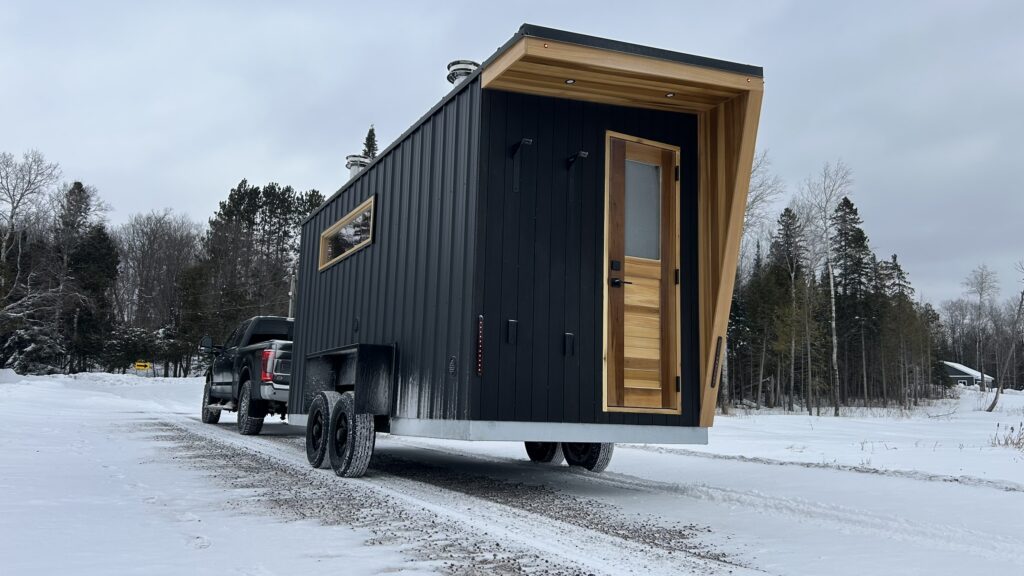
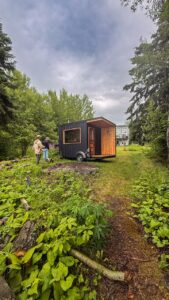
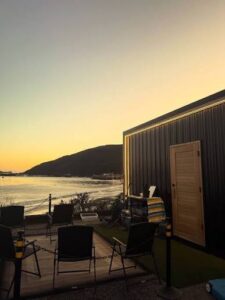
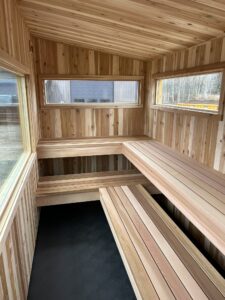
A backyard sauna and cold plunge is not two products. It’s one routine: heat, cold, rest, repeat. Design the space around that loop and everything else gets easier.
Here’s how to lay it out, what it needs, and what trips people up.
Start with the loop
A session looks like this:
- Heat. 10 to 15 minutes in the sauna.
- Cold. 1 to 3 minutes in the plunge, or a cold rinse.
- Rest. 5 to 10 minutes sitting outside.
- Repeat 2 or 3 times.
(More on the routine itself in How contrast therapy works.)
So the real design question isn’t “where does the sauna go?” It’s “what happens when you step out the door?”
- Where’s the cold?
- Where do you rinse?
- Where do you sit?
- Where do the towels go?
If any of those are awkward, people skip them. A shower tucked around the corner doesn’t get used. A plunge across a wet lawn in January doesn’t either.
The layout rules
- Keep it short. Sauna door to cold water in a few steps, not a walk across the yard. You’ll be barefoot and wet.
- Put the rinse in the path. An outdoor shower between the sauna and the plunge becomes part of the routine. Off to the side, it gets skipped.
- Give rest a real spot. A bench or chairs out of the wind, close to both. Rest is half the session.
- Hard, non-slip ground the whole way. Decking, pavers or stone. No grass or mud between stations.
- Face the view. Point the sauna window and the rest area toward the best thing on the property: the lake, the trees, the sunset.
- Think about wind and neighbors. Turn the door away from winter wind. Check sightlines from the house next door.
- Tie the materials together. Repeat the same wood, stone or metal across the sauna, deck and plunge so it reads as one space.
Pick your cold
| Option | Good | Watch out for |
|---|---|---|
| Lake, river or snow | Free, and nothing beats it. | Seasonal, needs safe entry, and never go alone. Ice holes need upkeep. |
| Cold shower or bucket | Cheapest, smallest footprint. | Less intense than a full plunge. Needs freeze-proof plumbing for winter. |
| Stock tank or DIY tub | Low cost, easy to start. | Temperature follows the weather. Freezes solid in winter. Needs regular draining and cleaning. |
| Chilled plunge tub | Same temperature year round. Filtered and covered. | Needs power, a GFCI circuit and a level pad. Costs more up front than a tank. |
| Cold pool or small pool | Social, room for several people, doubles as a summer pool. | Most expensive, most permitting, and pool fence rules apply. |
Utilities: plan these first
This is where projects stall. Sort it out before you pick a spot.
- Power for the sauna. Most electric heaters need their own 240V circuit. The farther from the panel, the more trenching and wire. A wood-burning stove skips this but needs fire clearances and a chimney.
- Power for the plunge. Chillers need their own GFCI-protected circuit. Anything electrical near water falls under strict code rules (NEC Article 680). This is a licensed electrician’s job.
- Water. A shower or plunge needs a fill source. In cold climates, use frost-free fixtures or plan to drain lines for winter.
- Drainage. Shower water and dumped plunge water have to go somewhere legal. Never into a storm drain or a neighbor’s yard. See Do I need a sewer connection for my sauna drain?
- Lighting. Low path lights between stations. Winter sessions often happen in the dark.
Getting it onto the property
Saunas and plunges are heavy. Delivery gets decided by the site, not the catalog.
- Measure the route. Gate width, slopes, overhead wires, septic fields, trees.
- Know how it arrives. A mobile sauna rolls in on its own trailer. A stationary sauna or precast pool may need a crane or a clear path for equipment.
- Prep the base first. Level gravel, pavers, piers or a slab, sized for the weight. A sauna on soft or sloped ground will twist over time.
- Find out early if access won’t work. Better to know before the deck and landscaping go in.
Make it work in winter
This is where a sauna earns its keep, especially in places like Minnesota.
- Short, covered paths. Shovel less, slip less.
- Somewhere warm to change. A changing room or covered porch makes January sessions realistic.
- A plunge that won’t freeze. Chillers usually keep water moving. Stock tanks need a heater or get put away for the season.
- Snow counts as cold. A snow roll beside the sauna is free and classic.
More on cold-season care in How to winter your cabin sauna in Minnesota.
Permits and code: the short version
- Sauna. Small outdoor saunas are often exempt from building permits, but setback, size and electrical rules still apply. Check with your city.
- Plunge. In many places, water deeper than 24 inches counts as a pool and needs a fence at least 48 inches tall. Tubs with a lockable safety cover (ASTM F1346) are often exempt. Ask your building department how they classify yours.
- Electrical. Permit and licensed electrician for the heater circuit and anything near water.
- Wood stoves. Check local burn rules and clearances to the house and trees.
What a specialist should handle, and what’s yours
The sauna itself is a hard thing to build right. Heat, airflow, vapor barrier, structure. That’s what we solve before it ever reaches your yard. (Here’s what goes wrong when it isn’t.)
The space around it is yours, or your designer’s. The view, the deck, the plants, the path, the fire pit. That’s where it becomes your place.
FAQ
Should you sauna or cold plunge first?
Sauna first, then cold, then rest. Repeat 2 or 3 times.
How far apart should the sauna and cold plunge be?
As close as is practical. A few steps is ideal. The farther you walk wet and barefoot, especially in winter, the less you’ll use it.
Can I put a sauna next to a pool?
Yes. It’s one of the best pairings. Plan for splash, non-slip decking, and pool fence rules that may now cover the sauna area too.
Do I need an outdoor shower?
Not strictly, but it makes the routine better and keeps the plunge cleaner. Put it in the walking path between the sauna and the cold.
Can I use a sauna and cold plunge in winter?
Yes, and many people like it best then. Plan for freeze-proof water, short covered paths and a warm place to change.
Ready to plan yours?
Start with how you’ll use it. Who’s coming, how often, which season. Then pick the pieces.
Browse our outdoor saunas and mobile saunas, or talk to us about your property.