Most first calls about a commercial mobile sauna start the same way. The buyer has a number in their head, and the number is around ten grand. It makes sense on the surface. A trailer sauna looks like a shed on wheels. Sheds cost ten grand.
Then the quotes come back at $40,000, $55,000, $70,000. The reaction is usually some version of: why is a mobile sauna so expensive?
This post answers that question with 2026 market numbers. It is written for business buyers. Rental operators, resort and retreat owners, short term rental hosts, event companies, gyms, and developers. If you are buying a sauna for a cabin you will use ten weekends a year, the math is different and the home sauna cost breakdown is the better read. A business buyer is buying a revenue asset that will see hundreds of sessions a year, and the price question changes accordingly.
What the market charges in 2026
Mobile sauna pricing in 2026 spans a wider range than almost any other purchase in this category. The same search that returns a $9,000 barrel kit on a utility trailer also returns commercial custom builds above $80,000. All of them are called a mobile sauna. They are not the same product.
| Tier | 2026 price range | What you are buying |
|---|---|---|
| Kit or DIY conversion | $8,000 to $18,000 | A barrel kit or shed shell mounted on a utility trailer. Minimal or no insulation. Consumer stove. Built for occasional personal use, not a duty cycle. |
| Production mobile sauna | $20,000 to $38,000 | A standardized build from a volume shop. Basic insulation, standard trailer, limited say in layout, materials, or heater. |
| Commercial grade custom | $40,000 to $70,000+ | Purpose engineered trailer and cabin, full insulated wall system, commercial duty heater, interior wood specified for heat and moisture cycling. Built for hundreds of sessions a year. |
| Large commercial builds | $70,000 to $100,000+ | Extended footprints, changing rooms, multi room layouts, fleet spec hardware, custom branding for hospitality and event operations. |
The question for a business buyer is not which number is cheapest. It is which tier survives your booking calendar. A unit that runs three private rentals a week faces more heat cycles in one season than a backyard sauna sees in five years. That duty cycle is what the price is paying for.
Why the price gap exists
A mobile sauna is not a shed. It is closer to a small commercial building that gets heated to 190 degrees, doused in steam, cooled to ambient, and then towed down a highway at 65 miles per hour. Repeatedly. Each part of that sentence adds cost.
The trailer and frame
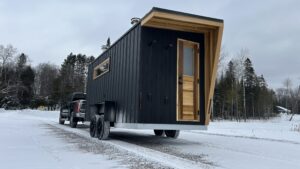
A utility trailer from the farm store is rated to carry weight. It is not engineered to carry a rigid cabin through thousands of miles of vibration, torsion, and frost heave without racking the structure above it. Purpose built commercial units start from a steel frame designed around the cabin, with axle capacity, brakes, and tongue geometry matched to the finished weight. On a build with a stove, stones, benches, and full wall assemblies, that weight is substantial. The frame alone can represent $8,000 to $15,000 of a commercial build before a single wall goes up.
The wall system
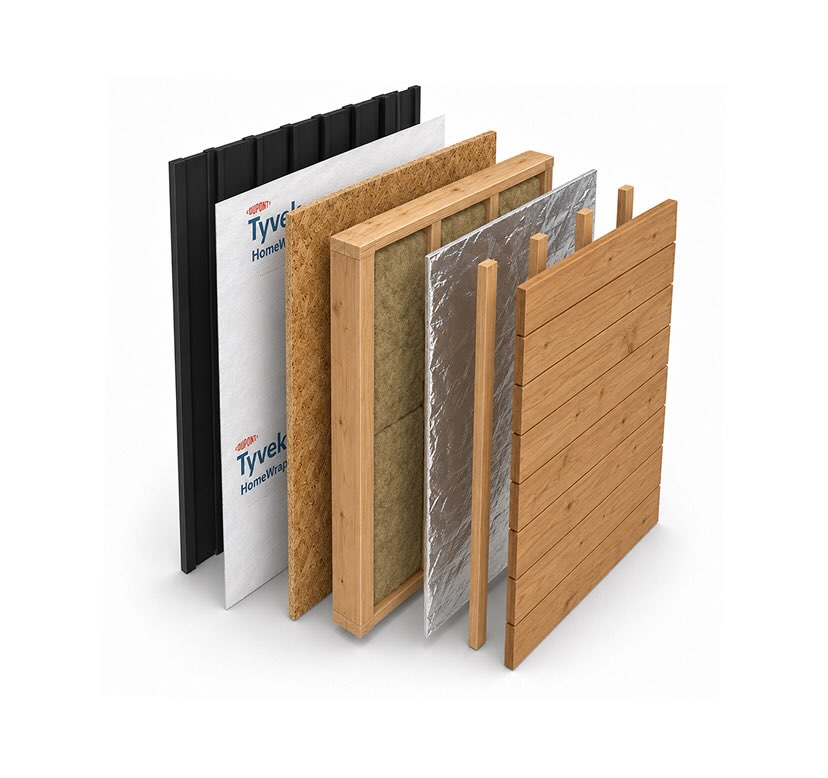
This is the least visible cost and the one that matters most for a rental business. A sauna wall has to hold heat in Duluth in February, shed interior moisture without trapping it in the cavity, and flex on the road without opening seams. That takes a layered assembly: framing, insulation, a sealed foil vapor barrier, an air gap behind the cladding, and interior wood rated for the environment. We break the full assembly down layer by layer in the heat layers of a trailer sauna.
For a business, the wall system is a fuel and labor line item. A properly insulated cabin comes to temperature fast and holds it between sessions. A thin walled unit burns wood or electricity all day fighting heat loss, and your staff spends the gap between bookings waiting on the thermometer.
The heater
Heater pricing alone explains a chunk of the market spread. Entry level wood burning stoves run a few hundred dollars and are built from thin sheet metal with a service life measured in single digit years. Commercial duty Finnish and Finnish-American stoves, the class of equipment that holds up under daily firing, run $2,000 to $4,000 or more before chimney components and heat shielding. On a rental unit, the stove is the most abused component in the build. Guests overfire them, slam the doors, and pour water without mercy. The heater decision, including whether wood or electric fits your operation, is covered in electric or wood burning stove, what is better for a sauna.
The wood
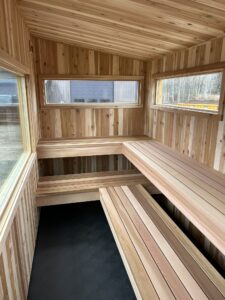
Interior cladding is where material prices moved the most over the last few years. Clear grade cedar pricing remains elevated in 2026, and it is the single most expensive surface in the build. Knotty cedar and aspen bring the cost down without giving up performance. Exotic and thermally treated species push it up. Beyond the species, the wood has to be acclimated to temperature and moisture content before installation. Cladding installed straight off the delivery truck in a Minnesota January will dry, shrink, and open gaps within the first heating season. Doing it right costs shop time, and shop time is in the price.
The labor
A commercial grade mobile sauna carries several hundred hours of skilled labor. Framing, sealing, cladding, stove installation, glazing, trailer integration, and finish work. This is the part of the price that has no shortcut. Builds that come in dramatically under market are not finding efficiencies. They are skipping steps you cannot see from the outside.
Estimate what your business should expect to pay
The estimator below kicks out a 2026 market planning range for a commercial grade custom build based on your operation. It is a budgeting tool, not a quote. Every real number depends on the specific build.
Select the configuration that matches your operation. The range updates as you go.
The revenue side of the price
The purchase price only makes sense next to what the asset earns. Across the US market in 2026, private mobile sauna rentals commonly run $300 to $600 per day and $800 to $1,200 per weekend, with stronger markets and better units above that. A single well run unit booked consistently through a cold season covers a meaningful share of its build cost in the first year or two of operation.
That math only holds if the unit keeps working and keeps looking like a professional product. Every rental client sees your sauna up close. If the door hangs crooked, the benches pitch on uneven ground, or the interior smells like a lumber yard mistake, you do not get the rebooking or the referral. The build quality is the marketing.
For the operating models themselves, including drop off rentals, hospitality placements, and event work, start with sauna business ideas. Short term rental owners weighing a sauna against other amenities should read why Airbnb guests prefer saunas over hot tubs and how a sauna moves nightly rates and occupancy. Offices and gyms adding heat as a member amenity are covered in sauna for offices.
The expensive shed problem
Here is the warning that matters most, and it is not about cheap saunas. Cheap saunas are honest. A $12,000 unit tells you what it is.
The trap is the expensive shed. A build priced at $45,000 or $55,000 that carries a commercial grade price tag on shed grade construction. The exterior photographs well. The listing uses the right words. Underneath, the walls are thin, the vapor barrier is incomplete or missing, the stove is a consumer unit dressed up with a heat shield, and the trailer is an off the shelf frame with a cabin bolted to it.
A high price is not evidence of a high spec. In a market growing this fast, price and quality have come apart. The only way to protect a five figure purchase is to ask specification questions and require specific answers.
The failure pattern is predictable. Year one is fine. Year two, road miles and heat cycling start opening seams. Moisture gets into an unsealed wall cavity and stays there. By year three the operator is paying for repairs on an asset that was supposed to be earning, and the unit reads as tired to every guest who books it. How long a sauna lasts comes down almost entirely to decisions made before it was built.
Seven questions to send every builder
Before you compare prices, make the prices comparable. Send these questions to every company on your list. A serious builder answers all seven in specifics. Vague answers are the answer.
- Describe your full wall assembly, layer by layer, from exterior siding to interior cladding. What insulation, what R-value, and what vapor barrier?
- Is the trailer engineered for this build, or is the cabin mounted on a stock utility trailer? What is the axle rating relative to the finished weight?
- What heater brand and model is in the base price, and is it rated for commercial duty cycles?
- How is the interior wood acclimated before installation, and what happens if boards gap or check in the first year?
- How does the unit level and stabilize on uneven ground at a client site?
- What does the build process look like week to week, and will I see progress photos?
- Who has run one of your units commercially for more than two seasons, and can I talk to them?
Question seven does the most work. Every builder has a happy customer from last month. Far fewer have rental operators still happy after two winters of duty. For a deeper look at separating builders from assemblers, see how to choose the right sauna company.
Where BW builds sit
BW mobile saunas start around $40,000 to $60,000 and up for larger custom and commercial builds. Every unit is built in our Duluth shop on a steel frame engineered around the cabin, with an eight layer wall system, foil vapor barrier, R-15 rock wool insulation, and an air gap behind the interior cladding. Heaters are IKI, Kuuma, or Harvia. Interiors run knotty cedar, clear cedar, aspen, or exotic woods, acclimated before installation. Standard footprints run from 6.5 by 8 feet up to large commercial trailer builds, including the Superior at 12 feet and the Gooseberry at 14 feet. We have put more than 50 mobile saunas on the road out of Duluth, with delivery nationwide. The full lineup is on the mobile sauna page.
If you are pricing a unit for a business, send us the seven questions above. We would rather compete on the answers than on the sticker.
Frequently asked questions
Why is a mobile sauna so expensive?
A mobile sauna combines three expensive problems in one product: a structure that holds 190 degree heat and steam, a vehicle that survives highway miles, and a finished interior that guests judge up close. Commercial grade builds carry an engineered trailer frame, a multi layer insulated and vapor sealed wall system, a commercial duty heater, acclimated interior wood, and several hundred hours of skilled labor. Units priced like sheds skip one or more of those, and the skipped items fail first under business use.
How much should I pay for a mobile sauna for my business?
In 2026, plan on $40,000 to $70,000 for a commercial grade custom mobile sauna, and $70,000 to $100,000 or more for large builds with changing rooms or fleet spec hardware. Production units run $20,000 to $38,000 and can work for light duty operations, with tradeoffs in insulation, heater grade, and longevity. Kit grade units under $20,000 are built for occasional personal use, not a booking calendar.
Can I start with a cheap mobile sauna and upgrade later?
You can, but the economics rarely work. The core costs in a sauna are the wall system, the frame, and the heater, and none of them retrofit well. Upgrading a thin walled unit means rebuilding it. Most operators who start cheap end up selling the first unit at a loss and buying the sauna they should have bought first. Buying once at the right spec is cheaper over five years.
How fast can a mobile sauna pay for itself?
It depends on your market and model. US rental rates in 2026 commonly run $300 to $600 per day and $800 to $1,200 per weekend. An operator booking a unit two to three weekends a month through a strong cold season grosses in the range of $20,000 to $35,000 a year on one unit, before fuel, insurance, and towing costs. Hospitality placements earn differently, through higher nightly rates and occupancy on the property. In both models, uptime is everything, which is why build grade drives payback more than purchase price does.
What is the biggest hidden cost in a cheap build?
Moisture in the wall cavity. An incomplete vapor barrier lets steam migrate into the insulation, where it condenses and stays. The damage is invisible until it is structural, and by then the fix is a rebuild. The second biggest is heater replacement. Consumer stoves under daily commercial firing fail in a few years, and downtime during your peak season costs more than the stove does.