
Does Sauna Increase Testosterone Levels?
The short answer
No. In every controlled study that has measured serum testosterone before and after sauna use, the change was not statistically significant. The largest of them put 30 men through 72 minutes of heat at 90 C and measured testosterone at 4.04 ng/ml before and 4.25 ng/ml after, a difference the authors reported as non-significant (Podstawski et al., American Journal of Men's Health, 2021). Cortisol in that same study fell 29 percent. Testosterone did not move.
Sauna does change your hormones. It changes cortisol, growth hormone and prolactin, sometimes sharply. Testosterone is the one hormone the research keeps finding flat, and it is the one the marketing keeps claiming. This page lays out what each study did, what it measured, and where the testosterone claim came from.
What the studies measured
Four studies have measured serum testosterone in men before and after sauna exposure. Here is all four, with the protocol attached.
| Study | Protocol | Testosterone result | What did change |
|---|---|---|---|
| Leppäluoto et al., 1986Acta Physiologica Scandinavica | 10 men and 7 women. 80 C dry sauna, 1 hour twice a day, 7 consecutive days. 14 hours of heat in one week. | No statistically significant change in testosterone, FSH, LH, TSH or thyroid hormones. | Growth hormone up 16-fold and prolactin up 2.3-fold in men (p < .01). Cortisol and ACTH both fell (p < .05). |
| Kukkonen-Harjula et al., 1989European Journal of Applied Physiology | Single Finnish sauna exposure with a full hemodynamic and hormonal panel. | Plasma testosterone unchanged. | Heat-related patterns in heart rate, noradrenaline, ACTH and prolactin. |
| Garolla et al., 2013Human Reproduction | 10 men, average age 33. 80 to 90 C, 15 minutes, twice a week, 3 months. | Testosterone, LH, FSH and inhibin B all stable through the study and the follow-up period. | Sperm count and motility fell significantly. Sperm DNA packaging and mitochondrial function altered. All of it returned to baseline by 6 months after stopping. |
| Podstawski et al., 2021American Journal of Men's Health | 30 men aged 19 to 26. Four 12-minute rounds at 90 to 91 C with 1 minute of 10 to 11 C cold immersion between rounds. | Testosterone 4.04 to 4.25 ng/ml. Not significant. | Cortisol 13.61 to 9.67 µg/ml (p < .001). DHEA-S and prolactin both flat. |
Four studies, thirty-five years, protocols ranging from 15 minutes twice a week to two hours a day for a week. Testosterone does not move in any of them. The 2006 review by Kukkonen-Harjula and Kauppinen in the International Journal of Circumpolar Health states it in one line: in men, plasma testosterone concentrations do not change.
What does change
Hormone response, 72 minutes at 90 C
Cortisol falls, and it falls most in the men who start highest
This is the most consistent finding in the literature. In Podstawski 2021, serum cortisol dropped from 13.61 to 9.67 µg/ml across 72 minutes (p < .001). The more interesting number is the correlation: r = -0.673 (p < .001) between a man's starting cortisol and the size of his drop. Men who walked in with high cortisol dropped the most. Men who walked in low barely moved, and four of the 30 showed no change or a slight rise.
Leppäluoto 1986 found the same direction over a week of twice-daily exposure, with cortisol and ACTH both down by the end. Worth noting this is not universal. Several single-session studies have recorded cortisol rising instead, typically in people who do not use sauna regularly. The pattern that emerges is adaptation: heat reads as a stressor the first few times and stops reading as one after that.
Growth hormone rises, but look at what it took
The 16-fold growth hormone figure repeated across the internet traces to one study: Leppäluoto et al., 1986. The protocol was one hour at 80 C, twice a day, for seven straight days. That is 14 hours of heat exposure in a week. The response also faded as the week went on, and the authors themselves suggested the growth hormone and prolactin increases may have been tied to heat-induced dehydration rather than to a training-style adaptation.
None of that makes the finding wrong. It makes it specific. A 20-minute session after the gym is not that protocol, and the figure should not be carried over to it. Other work has recorded more modest increases in the 2 to 5-fold range from single sessions.
Prolactin rises
Leppäluoto recorded a 2.3-fold increase in men and more than four-fold in women. Across the broader literature prolactin increases have ranged from 2 to 10-fold. Podstawski 2021 is the outlier: prolactin went slightly down, in a group of men who had already been using sauna twice a week for two months before the study began.
Where the testosterone claim comes from
Three specific errors produce it, and they show up in most of the pages ranking on this question.

1. A cortisol drop gets read as a testosterone rise. Cortisol and testosterone are often discussed as a ratio, and cortisol genuinely falls with regular sauna use. A falling denominator raises the ratio. It does not raise testosterone. Podstawski 2021 looked for an interaction between the two and found none: cortisol fell sharply, testosterone stayed where it was.
2. The growth hormone number gets borrowed. Growth hormone and testosterone both get filed under anabolic hormones, so a headline about one gets written as though it applies to both. They are produced by different tissue under different signals. The 16-fold figure belongs to growth hormone, under a protocol almost nobody runs.
3. Fitness gets mistaken for a sauna effect. This one is the most interesting, and it comes out of the same Podstawski data. The researchers also measured physical activity in MET-minutes per week and correlated it against testosterone. The correlation was r = .83 before sauna (p < .001) and r = .58 after (p = .001). Men who train had substantially higher testosterone at both time points. The correlation between activity level and the change during sauna was r = -.13, not significant.
Read that carefully, because it is the whole answer in one data set. Fitness predicted testosterone. Sauna did not change it. If you survey sauna users and find higher testosterone than average, you have most likely found a group of people who also train, not an effect of the heat.
Testosterone and sperm are not the same question
This is the distinction most pages collapse, and it is the one that matters practically. Garolla et al., 2013 in Human Reproduction followed 10 men with normal baseline semen parameters through three months of Finnish sauna at 80 to 90 C, 15 minutes, twice a week. Testosterone, LH, FSH and inhibin B did not change. Sperm count and motility fell significantly, along with changes to sperm DNA packaging and mitochondrial function.

The mechanism is temperature, not hormones. Sperm production runs best at a scrotal temperature a few degrees below core body temperature, and a sauna raises it. The hormonal signals that drive testosterone production were untouched the whole time.
The effect is also reversible on a known schedule. A full sperm production cycle runs roughly 64 to 72 days. In Garolla, parameters were improved but not fully recovered three months after the men stopped, and were back to baseline at six months.
Practically: if you are trying to conceive, this is a real consideration and worth raising with a doctor. If you are not, it has no bearing on your testosterone. The sample was 10 men, small enough that the size of the effect should be held loosely even though the direction is consistent with decades of research on testicular heat.
What the heat is well evidenced for
Testosterone is a weak claim. The cardiovascular data is not.

The Laukkanen 2015 cohort study in JAMA Internal Medicine followed 2,315 middle-aged Finnish men for an average of 20.7 years. Compared with men using sauna once a week, men using it 4 to 7 times a week had a hazard ratio of 0.37 for sudden cardiac death and 40 percent lower all-cause mortality. Session length mattered too: sessions over 19 minutes were associated with 52 percent lower sudden cardiac death risk than sessions under 11 minutes.
That is an observational cohort, not a trial, and the usual caution about self-selection applies. But it is a 20-year follow-up on more than two thousand men, which is a different class of evidence from a 30-man acute hormone panel. If you want the reason to build a sauna, it is in that literature, not in the testosterone question.
More on the cardiovascular evidence and on how long a session needs to be.
What this evidence cannot tell you
Worth being plain about the limits, because they are significant.
- The samples are small. Ten men, ten men, seventeen people, thirty men. These are physiology studies, not population trials.
- The participants are young and healthy. Podstawski 2021 ran on men aged 19 to 26 with moderate to high activity levels. Garolla averaged 33. None of this tells you what happens to a 60-year-old man with declining baseline testosterone, and anyone extending it there is guessing.
- The measurements are acute. Most of these studies measured before and immediately after. A study designed to detect a slow shift in baseline testosterone over a year of regular use has not been run.
- There is no dose-response curve for testosterone, because there is no response to curve.
- Podstawski 2021 had no control group of men who had never used a sauna, which the authors flag themselves. Their participants had all been using sauna twice weekly for two months beforehand, which is likely part of why cortisol fell rather than rose.
Every study referenced here is in our full research library, with the findings summarized and linked to the source. Read them yourself.
Common questions
Does sauna lower testosterone?
No. Leppäluoto 1986 found no significant change over seven days of twice-daily exposure. Garolla 2013 found none over three months of twice-weekly use. Podstawski 2021 found none across 72 minutes of heat at 90 C. Testosterone stays where it was. Sperm production is a separate question and does respond to heat.
Does sauna increase testosterone?
No. No controlled study has recorded a statistically significant increase in serum testosterone from sauna use. The small rise in Podstawski 2021, from 4.04 to 4.25 ng/ml, was reported as non-significant.
Does sauna after a workout kill your gains?
Nothing in the hormone data supports that. Testosterone is unchanged, cortisol tends to fall rather than rise in regular users, and growth hormone rises. The concern appears to come from the assumption that any stressor must be catabolic, which the measured hormone panels do not bear out.
Does sauna affect sperm count?
Yes, temporarily. In Garolla 2013, three months of twice-weekly 15-minute sessions at 80 to 90 C significantly reduced sperm count and motility in 10 healthy men. Everything returned to baseline by six months after stopping. If you are trying to conceive, raise it with a doctor.
Does sauna increase growth hormone?
Yes, and it is the most robust hormonal finding in the literature. The often-quoted 16-fold figure comes from Leppäluoto 1986, which used one hour at 80 C twice a day for seven consecutive days. A single ordinary session produces a smaller rise, and the authors suspected dehydration played a part.
Does cold plunging after sauna change the hormonal response?
Podstawski 2021 is the study that tested exactly that, with one minute of 10 to 11 C immersion between each of four heat rounds. Cortisol fell significantly. Testosterone, DHEA-S and prolactin did not move.
Is sauna bad for men?
The long-term cohort data points the other way. Laukkanen 2015 associated frequent use with substantially lower cardiovascular and all-cause mortality over 20 years. The one documented downside specific to men is the temporary and reversible effect on sperm production.
The short version
Sauna does not raise testosterone and does not lower it. It lowers cortisol, most in the people who start highest. It raises growth hormone and prolactin acutely. It temporarily reduces sperm production through direct heat on the testes, and that reverses. The reason to own a sauna is twenty years of cardiovascular and mortality data, not a hormone claim that four studies have now failed to find.
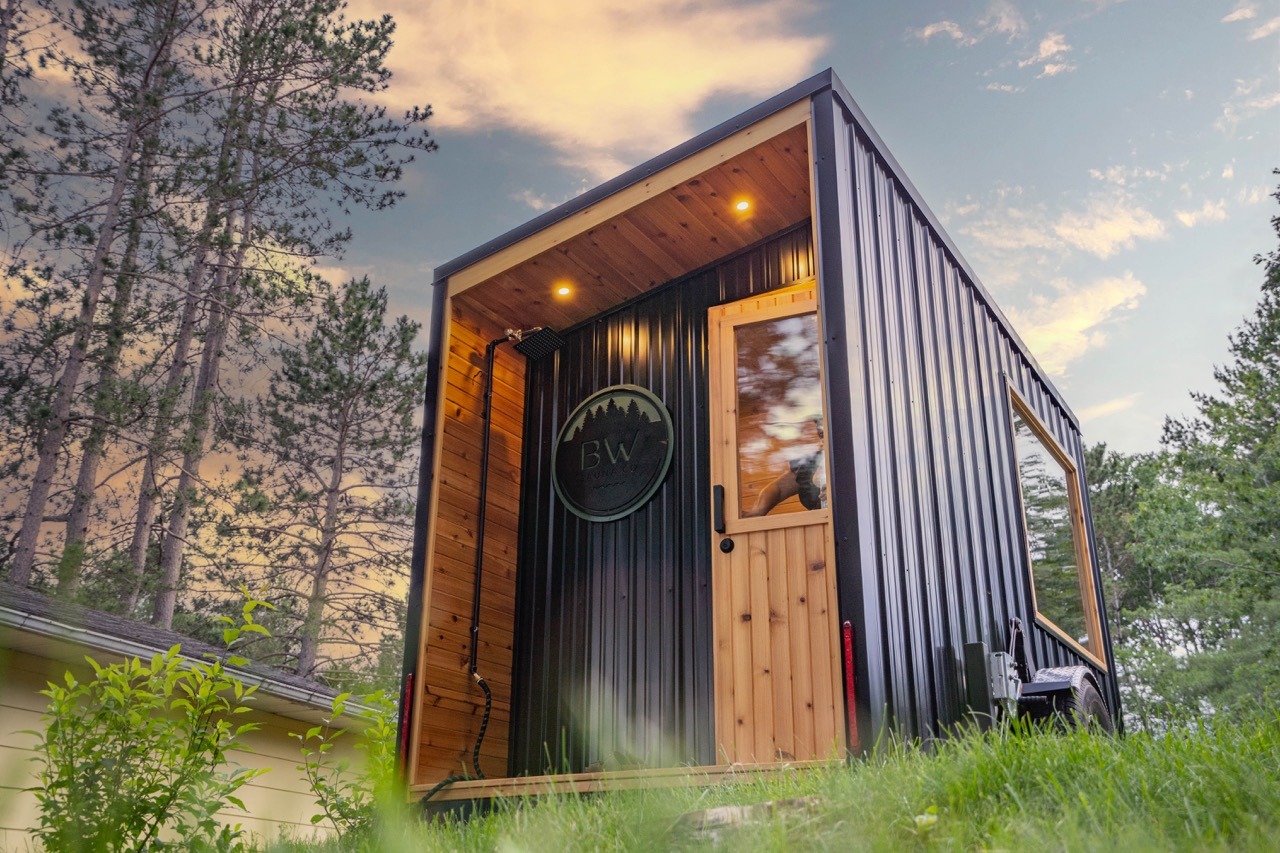
We build traditional Finnish saunas in Duluth, Minnesota and deliver nationwide. That means 80 to 90 C, real stove heat, and the construction to hold it.
Primary sources
- Leppäluoto J, Huttunen P, Hirvonen J, Väänänen A, Tuominen M, Vuori J. Endocrine effects of repeated sauna bathing. Acta Physiologica Scandinavica. 1986;128(3):467-470. PubMed
- Kukkonen-Harjula K, Oja P, Laustiola K, et al. Haemodynamic and hormonal responses to heat exposure in a Finnish sauna bath. European Journal of Applied Physiology. 1989;58:543-550. Springer
- Kukkonen-Harjula K, Kauppinen K. Health effects and risks of sauna bathing. International Journal of Circumpolar Health. 2006;65(3):195-205. Full text
- Garolla A, Torino M, Sartini B, et al. Seminal and molecular evidence that sauna exposure affects human spermatogenesis. Human Reproduction. 2013;28(4):877-885. PubMed
- Laukkanen T, Khan H, Zaccardi F, Laukkanen JA. Association between sauna bathing and fatal cardiovascular and all-cause mortality events. JAMA Internal Medicine. 2015;175(4):542-548. PubMed
- Podstawski R, Borysławski K, Pomianowski A, Krystkiewicz W, Żurek P. Endocrine effects of repeated hot thermal stress and cold water immersion in young adult men. American Journal of Men's Health. 2021;15(2). PMC
- Hussain J, Cohen M. Clinical effects of regular dry sauna bathing: a systematic review. Evidence-Based Complementary and Alternative Medicine. 2018;2018:1857413. PMC
